Understanding the Reasons Behind Your Parrot’s Nocturnal Screaming
Parrots are known for their vibrant colors, playful personalities, and impressive ability to mimic human speech. However, one behavior that can be quite frustrating for parrot owners is their tendency to scream at night. This can be especially disruptive for those who live in apartments or have close neighbors. If you find yourself wondering why your parrot is screaming at night, you are not alone. In this article, we will explore the reasons behind this behavior and provide some tips on how to address it.
First and foremost, it is important to understand that parrots are naturally diurnal creatures, meaning they are most active during the day and sleep at night. This is due to their instinctual need to forage for food and socialize with their flock during daylight hours. However, in captivity, parrots can become confused about their natural sleep patterns. This can lead to them being awake and active at night, which can result in excessive screaming.
Another reason for nocturnal screaming in parrots is boredom. In the wild, parrots have a variety of activities to keep them occupied, such as foraging for food, grooming, and interacting with other birds. However, in captivity, they may not have access to these natural behaviors, leading to boredom and frustration. This can manifest in the form of screaming, especially at night when there is less stimulation.
Additionally, parrots are highly social creatures and require a significant amount of attention and interaction from their owners. If they do not receive enough mental and physical stimulation during the day, they may resort to screaming at night to get attention. This can be a learned behavior, as the parrot realizes that screaming results in their owner coming to check on them.
Another factor that can contribute to nocturnal screaming in parrots is a lack of proper sleep. Just like humans, parrots need a quiet and dark environment to get a good night’s rest. If their sleeping area is too bright or noisy, they may have trouble falling and staying asleep. This can lead to them being restless and vocal at night, which can be disruptive for both the parrot and their owner.
Furthermore, certain medical conditions can also cause parrots to scream at night. For example, if a parrot is in pain or discomfort, they may vocalize to express their discomfort. It is essential to rule out any potential health issues by taking your parrot to a veterinarian if their screaming behavior persists.
So, what can you do to address your parrot’s nocturnal screaming? The first step is to ensure that your parrot has a proper sleep environment. This means providing a quiet and dark sleeping area, away from any potential sources of noise or light. You can also try covering their cage with a breathable cloth to create a cozy and dark space for them to sleep in.
Another crucial aspect is to provide your parrot with enough mental and physical stimulation during the day. This can include toys, puzzles, and regular interaction with their owner. It is also essential to establish a consistent daily routine for your parrot, including designated playtime and bedtime. This can help them understand when it is time to be active and when it is time to sleep.
If your parrot’s screaming behavior is a learned behavior, it is essential to not reinforce it by giving them attention when they scream. Instead, wait for a moment of quiet and then reward them with attention and treats. This will teach them that being quiet results in positive reinforcement.
In conclusion, there can be various reasons why your parrot is screaming at night, including confusion about their natural sleep patterns, boredom, lack of attention, and medical issues. By understanding the underlying causes and implementing the appropriate strategies, you can help your parrot get a good night’s rest and reduce their nocturnal screaming behavior. Remember to be patient and consistent, and with time, your parrot’s nighttime vocalizations should decrease.
Tips for Managing and Reducing Nighttime Screaming in Pet Parrots
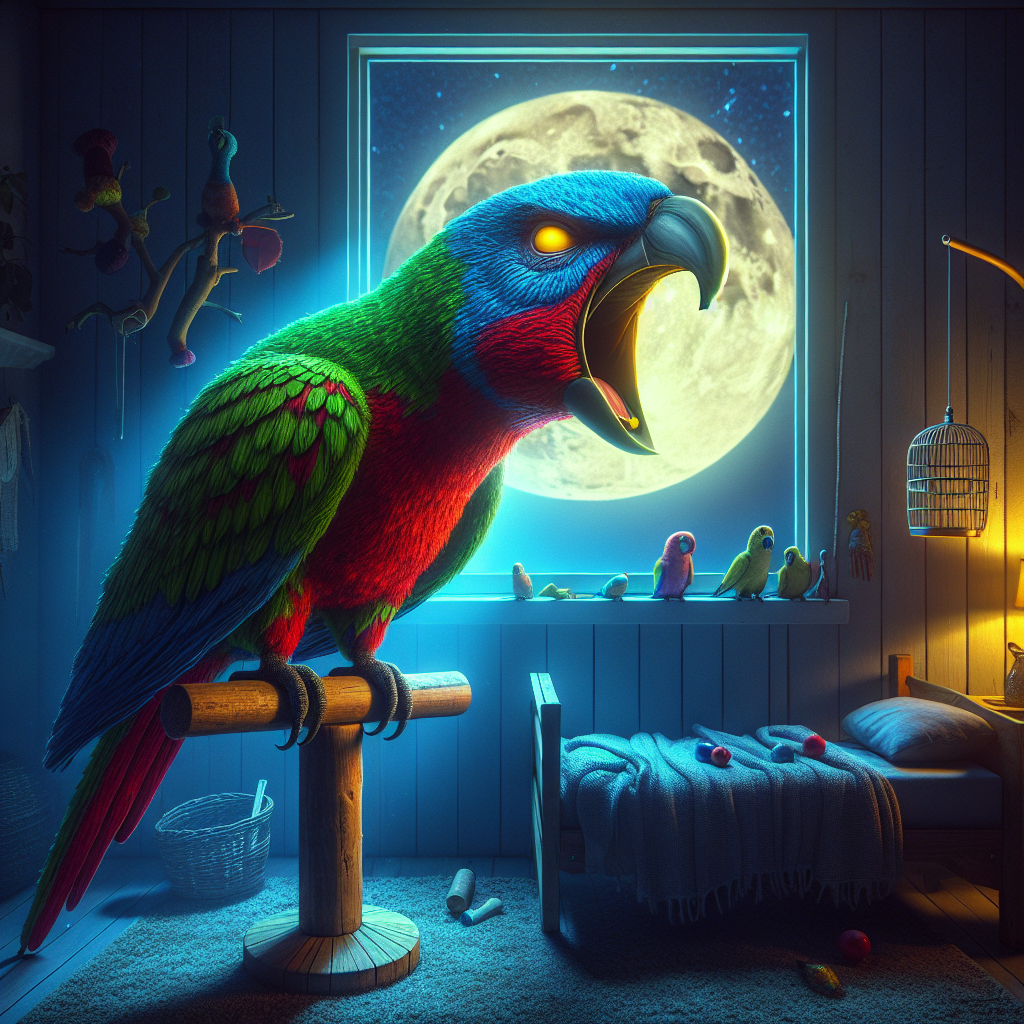
Parrots are known for their vibrant colors, playful personalities, and ability to mimic human speech. They make great pets for those who are looking for a companion that is intelligent and entertaining. However, one common issue that many parrot owners face is their pet’s nighttime screaming. This can be a frustrating and disruptive behavior, especially for those who live in close quarters with neighbors. In this article, we will explore the reasons behind why parrots scream at night and provide some tips for managing and reducing this behavior.
First and foremost, it is important to understand that parrots are naturally diurnal creatures, meaning they are most active during the day and sleep at night. In the wild, they would wake up at sunrise and go to sleep at sunset. However, as pets, they have adapted to our schedules and may not always follow this natural pattern. This can lead to them being awake and active at night, which can result in screaming.
Another reason for nighttime screaming in parrots is boredom. Parrots are highly intelligent animals and need mental stimulation to keep them occupied. If they are not given enough toys, puzzles, and activities during the day, they may become bored and resort to screaming at night. This is their way of seeking attention and entertainment.
Additionally, parrots are social creatures and need companionship. If they are left alone for long periods of time, they may become anxious and resort to screaming. This is especially true for parrots that are used to being in a flock or have bonded closely with their owners. They may feel lonely and insecure when left alone at night, leading to excessive screaming.
So, what can you do to manage and reduce nighttime screaming in your pet parrot? The first step is to ensure that your parrot is getting enough mental and physical stimulation during the day. This can include providing a variety of toys, puzzles, and activities for them to engage in. You can also rotate their toys regularly to keep them interested and stimulated. Additionally, spending quality time with your parrot and providing them with attention and affection can help alleviate boredom and loneliness.
Another tip is to establish a consistent bedtime routine for your parrot. This can include covering their cage at the same time every night and providing a quiet and dark environment for them to sleep in. This will help them understand that it is time to sleep and reduce the chances of them becoming active and vocal at night.
If your parrot continues to scream at night, it may be helpful to consult with a veterinarian or a certified avian behaviorist. They can assess your parrot’s behavior and provide personalized advice and strategies to address the issue. It is important to note that screaming can also be a sign of underlying health issues, so it is always best to rule out any medical causes.
In some cases, parrots may scream at night due to external factors such as loud noises or changes in their environment. If this is the case, it may be helpful to provide a white noise machine or play calming music to drown out any disruptive sounds. You can also try to minimize any changes in their environment, such as rearranging furniture or introducing new pets, as this can cause stress and lead to nighttime screaming.
In conclusion, parrots may scream at night due to a variety of reasons, including their natural diurnal rhythm, boredom, loneliness, or external factors. As responsible pet owners, it is our duty to understand and address this behavior in a compassionate and effective manner. By providing enough mental and physical stimulation, establishing a consistent bedtime routine, and seeking professional help if needed, we can manage and reduce nighttime screaming in our beloved pet parrots. Remember, patience and understanding are key when it comes to addressing any behavioral issues in our feathered friends.
The Importance of Proper Sleep and Environment for Your Parrot’s Well-Being
Parrots are known for their vibrant colors, playful personalities, and impressive ability to mimic human speech. They make wonderful pets and can bring joy and companionship to their owners. However, as with any pet, it is important to understand their needs and provide them with a suitable environment to thrive in. One common issue that parrot owners may face is their bird screaming at night. This can be a cause of concern for many owners, but it is important to understand the reasons behind this behavior and how to address it.
First and foremost, it is crucial to understand that parrots are diurnal creatures, meaning they are most active during the day and sleep at night. In the wild, parrots are used to waking up with the sunrise and going to sleep at sunset. However, in captivity, their sleep patterns can be disrupted due to various factors such as artificial lighting, noise, and human interaction. This can lead to behavioral issues, including excessive screaming at night.
One of the main reasons why parrots may scream at night is due to a lack of proper sleep. Just like humans, parrots need a good night’s rest to maintain their physical and mental well-being. Without adequate sleep, they can become irritable, stressed, and even develop health problems. Therefore, it is essential to provide your parrot with a quiet and dark environment at night to ensure they get the rest they need.
Another factor that can contribute to your parrot’s nighttime screaming is boredom. Parrots are highly intelligent creatures and need mental stimulation to keep them engaged and happy. If they are left alone in a cage for long periods without any form of entertainment, they may resort to screaming as a way to release their pent-up energy and frustration. To prevent this, make sure to provide your parrot with plenty of toys, puzzles, and activities to keep them mentally stimulated throughout the day.
Additionally, parrots are social creatures and thrive on interaction with their owners. If they are left alone for extended periods, they may feel lonely and anxious, leading to nighttime screaming. It is crucial to spend quality time with your parrot every day, engaging in activities such as training, playing, and talking to them. This will not only strengthen your bond but also provide them with the social interaction they need to feel content and secure.
Furthermore, it is essential to consider the type of parrot you have and their natural sleep patterns. Some parrot species, such as cockatiels and budgies, are known to be more active at night and may naturally make more noise during these hours. If you have one of these species, it is important to understand and accept their natural behavior rather than trying to change it.
In some cases, parrots may also scream at night due to underlying health issues. If your parrot’s nighttime screaming is sudden and excessive, it is crucial to take them to a veterinarian for a check-up. They may be experiencing pain or discomfort, which can cause them to vocalize more than usual. It is always better to rule out any potential health problems before assuming it is a behavioral issue.
In conclusion, proper sleep and environment are crucial for your parrot’s well-being. As diurnal creatures, they need a quiet and dark environment at night to get the rest they need. Providing them with mental stimulation, social interaction, and understanding their natural sleep patterns can also help prevent nighttime screaming. If the behavior persists, it is important to consult a veterinarian to rule out any underlying health issues. With proper care and attention, your parrot can have a peaceful and restful night’s sleep, leading to a happy and healthy life.